
Inauguration Ceremony of the 18th International Conference on Quality Assessment and Assurance in University Systems - ent- دانشکده کار آفرینی
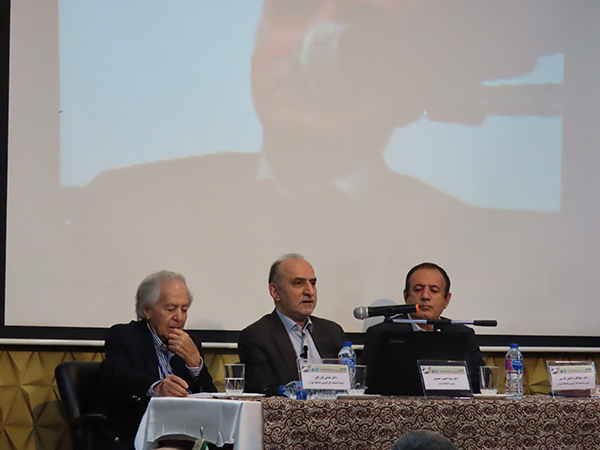 Inauguration Ceremony of the 18th International Conference on Quality Assessment and Assurance in University Systems
According to the Public Relations and International Affairs Unit of the Faculty of Entrepreneurship, the inauguration ceremony of the 18th International Conference on "Quality Assessment and Assurance in University Systems" commenced on Tuesday, April 22, 2025, at 08:00 AM at the Faculty of Entrepreneurship, University of Tehran
The ceremony began with the recitation of the Holy Quran and the playing of the national anthem. Subsequently, the Dean of the Faculty of Entrepreneurship and Conference Chair extended a warm welcome to both in-person and virtual attendees. They expressed their delight and gratitude for the presence of the distinguished guest, Dr. Seyed Hossein Hosseini, Acting President of the University of Tehran, and the collaboration of Dr. Abbas Bazargan Harandi, a distinguished professor in the field of "Education and Quality Assurance" and Secretary of the Permanent Committee of the Conference on "Quality Assessment and Assurance in University Systems."i
Dr. Jahangir Yadollahi Farsi, in his address, emphasized the importance of university education aimed at nurturing entrepreneurial, responsible, and actively engaged professionals in the generation and application of knowledge. He underscored the necessity of "educational assessment" to ensure the effectiveness of education, which evaluates the extent to which learning objectives have been achieved. According to him, learning can be categorized into several dimensions: a) Acquiring new knowledge b) Developing skills to apply acquired knowledge c) Gaining the ability to receive feedback from actions d) Developing the capacity to envision future goals and devise a roadmap to achieve them e) Acquiring the ability to identify necessary knowledge and skills to follow the roadmap f) Cultivating self-assessment and personal development to build individual competencies.i
With this comprehensive perspective on learning, the significance of quality assessment and assurance becomes even more pronounced. The Conference Chair concluded by expressing hope that, with the participation of esteemed scholars, one of the key outcomes of the conference would be the "enhancement of the quality assessment and assurance system in university frameworks." Ultimately, by improving and achieving quality, universities can fulfill their mission of fostering entrepreneurship and social responsibility.i
Following this, Dr. Mohammadreza Zali, a faculty member of the Faculty of Entrepreneurship and the Scientific Secretary of the conference, delivered a speech on the importance of "educational assessment and accreditation." He briefly reviewed the history of the previous seventeen conferences and provided statistics on submitted papers and scientific activities. The Scientific Committee accepted eighteen papers for in-person or virtual presentation during the two-day conference. The event features virtual participation from guests and speakers from Iraq, Turkey, China, Malaysia, Poland, Sweden, and Belgium, with three guests from Poland, Sweden, and Iraq presenting papers on the second day. Four scientific panels will be held over the two days, with two panels on the first day and two on the second.i
The closing ceremony is scheduled for Wednesday, April 23, 2025, from 16:00 to 17:00, focusing on the "Presentation of the Resolution of the 18th International Conference" and the "Invitation to the Host University for the Next Conference in April 2026." The ceremony will be attended by Dr. Mohammadreza Zali, Scientific Secretary of the Conference, Dr. Ali Bagher Taherinia, Secretary of the Science and Technology Headquarters of the Cultural Revolution Council, and Dr. Abbas Sadeghi, representative of the University of Guilan.i
After the inauguration ceremony, Dr. Seyed Hossein Hosseini, Acting President of the University of Tehran, delivered a speech on "The Role of Quality Assessment in Education at the University of Tehran." He highlighted the university’s role as the primary platform for knowledge creation, innovation, and societal progress. According to him, prioritizing quality in higher education activities is not only a measure of the university system's efficiency but also a fundamental pillar for scientific advancement, sustainable development, and the empowerment of future generations. Ensuring quality in higher education enhances the academic standing of universities while addressing societal needs, increasing entrepreneurial activities, and developing competent, skilled, and efficient human resources.i
He further elaborated on three strategic objectives pursued by the University of Tehran under its strategic plan:i
Transitioning toward an entrepreneurial university
Internationalization of the university
Playing an active role in social responsibility
A key factor in realizing the entrepreneurial university mission (alongside education and research as the first and second missions) is the development of entrepreneurship education, integrated both vertically and horizontally into the university’s core objectives. To enhance the quality of teaching and learning, the University of Tehran has undertaken numerous initiatives, including revising curricula and lesson plans across various disciplines to align with industry and societal needs. Notable efforts include the implementation of the "Cooperative Education Program (Co-op)," the development of internship programs, the design of dual-degree programs, and the adoption of experiential learning methods. These skill-oriented, experiential, and entrepreneurship-focused programs are designed to connect with the market and domestic value chains through the University of Tehran’s Science and Technology Park and align with industry and market demands.i
Dr. Hosseini also noted that the University of Tehran has designed and implemented interdisciplinary programs (known as "Kahad") in over 18 fields, including computer engineering, economics, Persian language and literature, archaeology, and entrepreneurship, adopting innovative educational approaches. Achieving the entrepreneurial university vision requires not only revising educational and research processes but also expanding entrepreneurship education both horizontally (e.g., through Kahad programs) and vertically across various academic levels. These efforts aim to train entrepreneurs, educators, and policymakers in entrepreneurship while fostering an entrepreneurial mindset among talented and interested students from other disciplines. Support for entrepreneurial ideas is provided through the University’s Science and Technology Park, innovation hubs, and the Faculty of Entrepreneurship, the first of its kind in the Middle East and North Africa
Experts today believe that the primary mission of universities is to cultivate an entrepreneurial mindset among students, not merely as a profession but as a lifestyle, integrating this mindset into decision-making, behavior, and problem-solving for improved well-being. The University of Tehran is committed to advancing in this direction, aiming not only to increase graduate employability but also to enhance their entrepreneurial capacity.i
In today’s rapidly evolving world of scientific and technological advancements, continuous quality assessment and improvement in university systems are essential for maintaining competitiveness and adapting to society’s changing needs. It is noteworthy that the University of Tehran established its Quality Assessment Center in 2006 under the direct supervision of the university president, pioneering quality assessment and improvement in higher education in Iran. The university was also the first institutional member of the Asia-Pacific Quality Network (APQN).i
This conference, held annually for the past 18 years without interruption, provides a valuable opportunity for exchanging experiences and presenting innovative solutions in quality assessment, assurance, and enhancement in higher education. Dr. Seyed Hossein Hosseini expressed hope that, with the collaboration of distinguished scholars, significant steps would be taken to improve quality in Iran’s higher education system and elevate universities to a more prominent position nationally and internationally through scientific and research cooperation. He concluded by wishing success to all participants and expressing gratitude to scholars and researchers from prestigious global universities who have collaborated with the conference.i
It is worth mentioning that the Faculty of Entrepreneurship at the University of Tehran is hosting the International Conference on "Quality Assessment and Assurance in University Systems" for the second time. i