
History - دانشکده الهیات و معارف اسلامی ftis
Here’s a polished English translation of your text, suitable for a university website or official publication:
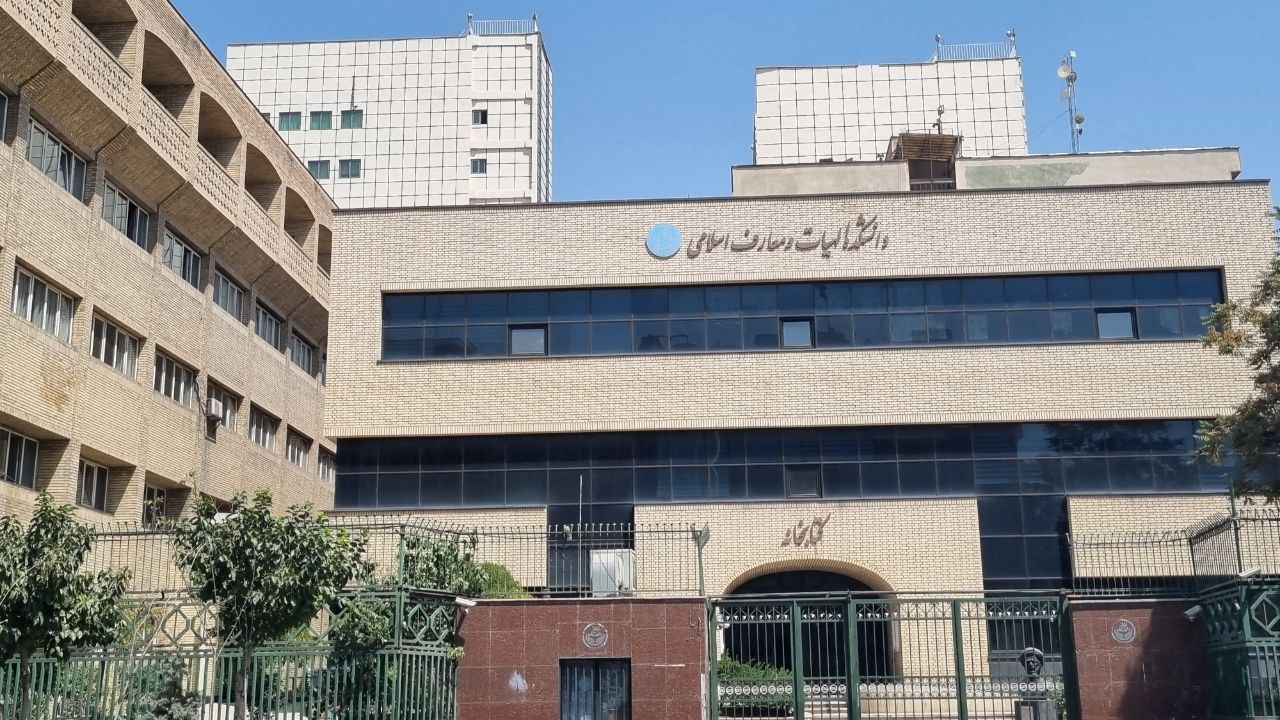
Faculty of Theology and Islamic Studies, University of Tehran
The Faculty of Theology and Islamic Studies at the University of Tehran is one of the oldest academic centers in the country. Its origins trace back to the Sepahsalar School, forming in the early 14th century AH (Solar Hijri calendar). Nineteen days after the establishment of the University of Tehran, on June 17, 1934 (27 Khordad 1313 SH), the faculty was inaugurated as one of the six branches of the university under the name Faculty of Rational and Transmitted Sciences, in the same location. Today, the faculty is approaching its centennial. This account outlines the faculty’s various historical periods.
First Period: 1934–1939 (1313–1318 SH)
During this five-year period, the faculty offered undergraduate programs in three fields: Rational Sciences, Transmitted Sciences, and Literature, continuing until 1939. Nearly 100 students graduated and received their bachelor's degrees.
The faculty’s president and vice-president were Professors Nasrollah Taghavi and Badi’ al-Zaman Forouzanfar. Students also benefited from the instruction of distinguished professors such as Mirza Taher Tonekaboni, Zain al-Abidin Zolmajden, Gholamreza Rashid Yasemi, Seyyed Kazem Asar, Seyyed Mohammad Mashkoveh, Ahmad Bahmanyar, and others.
In 1939, the faculty was dissolved for various reasons. Students continued their studies either at the Faculty of Literature or the Faculty of Law.
Second Period: 1942–1967 (1321–1346 SH)
The faculty reopened on October 31, 1942 (10 Aban 1321 SH) with official ceremonies at the Academy building in Sepahsalar Garden, attended by cultural figures and political leaders.
In the first session of the Faculty Council for Rational and Transmitted Sciences, Professors Seyyed Kazem Asar and Mahmoud Shahabi were unanimously elected as president and vice-president. Professor Badi’ al-Zaman Forouzanfar was appointed the faculty’s representative to the University Senate. Two years later, Professor Asar resigned, and on June 8, 1944 (18 Khordad 1323 SH), Professor Forouzanfar was unanimously elected president, a position he held until his retirement in 1967 (1346 SH). Professor Forouzanfar appointed Dr. Mohammad Mohammadi Malayeri as his vice-president.
During this period, gradual changes were made to the educational system, and student enrollment increased. In 1955 (1334 SH), the doctoral program was launched with 48 students. The faculty’s budget was increased from 55,000 to 400,000 Tomans, allowing expansion and relocation from the small Academy building to a larger facility on Hoghoughi Street.
In 1956 (1335 SH), Dr. Mohammad Mohammadi Malayeri was granted a mission by the university president to travel to Islamic countries to study their universities. He resigned from the vice-presidency, and Dr. Abdolhamid Golshan Ebrahimi replaced him.
By 1963–1964 (1342 SH), the faculty’s educational and research activities were organized into seven departments:
-
Comparative Religion & Sects – Head: Dr. Ali Akbar Fayyaz
-
Arabic Language & Literature – Head: Seyyed Mohammad Baqer Sabzevari
-
Mysticism & its Literature – Head: Badi’ al-Zaman Forouzanfar
-
Quranic Studies & Hadith – Head: Seyyed Mohammad Mashkoveh
-
Islamic Culture & Civilization – Head: Dr. Fakhr al-Din Shadman
-
Jurisprudence & Principles – Head: Mahmoud Shahabi
-
Islamic Philosophy & Wisdom – Head: Hossein Ali Rashed
In 1964 (1343 SH), the faculty’s name was officially changed from Rational and Transmitted Sciences to Theology and Islamic Studies.
By 1966 (1345 SH), a new credit-based grading system replaced the old one, and the faculty’s master’s program was launched. During these years, 43 professors joined the faculty, holding titles ranging from teacher, assistant professor, associate professor, to full professor. Notable faculty included Hossein Ali Rashed, Mehdi Elahi Ghomshei, Morteza Motahhari, Manouchehr Sotoudeh, Seyyed Hassan Taghizadeh, Mohammad Taghi Danesh-Pajouh, Abdolhossein Zarrinkoub, among others. Some had also studied at the faculty.
By this period’s end, approximately 2,000 undergraduate and 100 doctoral graduates had contributed significantly to administrative and academic institutions. Notable alumni include Abbas Zaryab Khoei, Seyyed Jafar Shahidi, Seyyed Jafar Sami al-Dabbouni, Nasereddin Saheb Zamani, Mehdi Mohaqqeq, Ahmad Mahdavi Damghani, Mohammad Ebrahim Bastani Parizi, and others.
In 1966 (1345 SH), the faculty moved to the former Saadi Elementary School building on Amir Kabir Street. Professor Forouzanfar retired in 1967 (1346 SH) after over 33 years of service.
Third Period: 1968–1978 (1347–1357 SH)
Following Professor Forouzanfar’s retirement, Dr. Mohammad Mohammadi Malayeri returned from Lebanon and the American University of Beirut to become faculty president. Until his return in 1968, Dr. Golshan acted as interim head. From 1969 to 1977 (1348–1356 SH), Dr. Azartash Azarnoush served as vice-president.
Dr. Malayeri’s leadership transformed the faculty into a major Islamic academic institution, emphasizing research and education.
In 1969 (1348 SH), undergraduate programs were temporarily suspended, and changes were made to the selection process for master’s and doctoral students. By 1973 (1352 SH), a selective undergraduate admission process was introduced, with fewer students admitted across undergraduate, master’s, and doctoral programs. The faculty offered programs in Comparative Religion & Mysticism, Islamic Culture & Civilization, Quranic Sciences, Jurisprudence & Islamic Law Foundations, and Islamic Philosophy & Wisdom at all three levels.
During this period, 18 additional faculty members joined, some of whom were alumni of the faculty. International relations expanded, including participation in the first Congress of the Union of Islamic Universities in 1969 (1348 SH), where Dr. Malayeri proposed teaching Persian at Islamic universities worldwide.
In 1970 (1349 SH), the Pope’s representative, Joseph Quack, visited the faculty and donated several rare volumes.
In 1977 (1356 SH), Dr. Azarnoush resigned as vice-president, replaced by Dr. Asad Sheikh al-Islami. By the early 1970s, construction began at the current Takht Tavous (now Shahid Motahhari) site, with two main buildings completed by 1975 (1354 SH). The main auditorium became a masterpiece of contemporary art, featuring intricate brick calligraphy designed by Professor Mohammad Ehsai, completed in 1978 (1357 SH), later named after Dr. Mohammad Mofatteh.
Fourth Period: 1979–2001 (1358–1380 SH)
After the Islamic Revolution, in which faculty members such as Morteza Motahhari, Mohammad Mofatteh, Mohammad Hossein Beheshti, Mohammad Javad Bahonar played key roles, the faculty underwent significant changes.
On March 6, 1979 (16 Esfand 1357 SH), Dr. Mohammad Mofatteh was appointed temporary head of the faculty. Dr. Asad Sheikh al-Islami remained vice-president. On December 18, 1979 (27 Azar 1358 SH), Dr. Mofatteh was assassinated outside Building 1 by terrorist groups.
From 1979 to 1985 (1358–1364 SH), Dr. Ali Mahdizadeh and then Seyyed Abolfazl Mirmohammadi (1985–1996 / 1364–1375 SH) served as faculty presidents. During this period, Building 3 was established, and all classrooms moved there.
From 1996 to 2002 (1375–1381 SH), Gholamreza Mesbahi Moghaddam and Hassan Saadat Mostofi each served three-year terms as presidents. Many former faculty retired, and new members joined, including Abdolkarim Biazar Shirazi, Hadi Alamzadeh, Gholamhossein Ebrahimi Dinani, Gholamreza Aavani, Abdolkarim Soroush, Najafgholi Habibi, Mohammad Mojtahed Shabestari, Zahra Mostofi, Hossein Davarzani, Mostafa Malekian, and others.
In 1996 (1375 SH), the Research Institute for the History of Science was approved under the faculty by the Ministry of Science and began operating in 1999 (1378 SH), focusing on the history of sciences during the Islamic period. It has four groups: History of Mathematics, History of Astronomy, History of Medicine & Pharmacy, and History of Physics & Technology.
Fifth Period: 2002–Present (1381–1402 SH)
During this period, Dr. Ali Aliabadi (3 years), Dr. Mohammad Reza Emam (8 years), Dr. Majid Ma’aref, Dr. Ahmad Bagheri, and Mahmoud Vaezi (each 3 years) served
Former Deans of the Faculty of Theology and Islamic Studies